- Glacial Errata
- Posts
- Glacial Errata, No. 65
Glacial Errata, No. 65
Five Things for the Week of April 6, 2026.

Colin Dickey
April 06, 2026
One
The Monuments show at MOCA in downtown LA is still up for another month, and if you haven’t already seen it and have a chance to, I highly recommend it. There’s a lot going on, but in several of the rooms, there are statues of former confederates that have been removed from public places (in some cases still bearing spray paint from when they were defaced before being taken down), now re-contextualized with newly commissioned work from contemporary African-American artists.
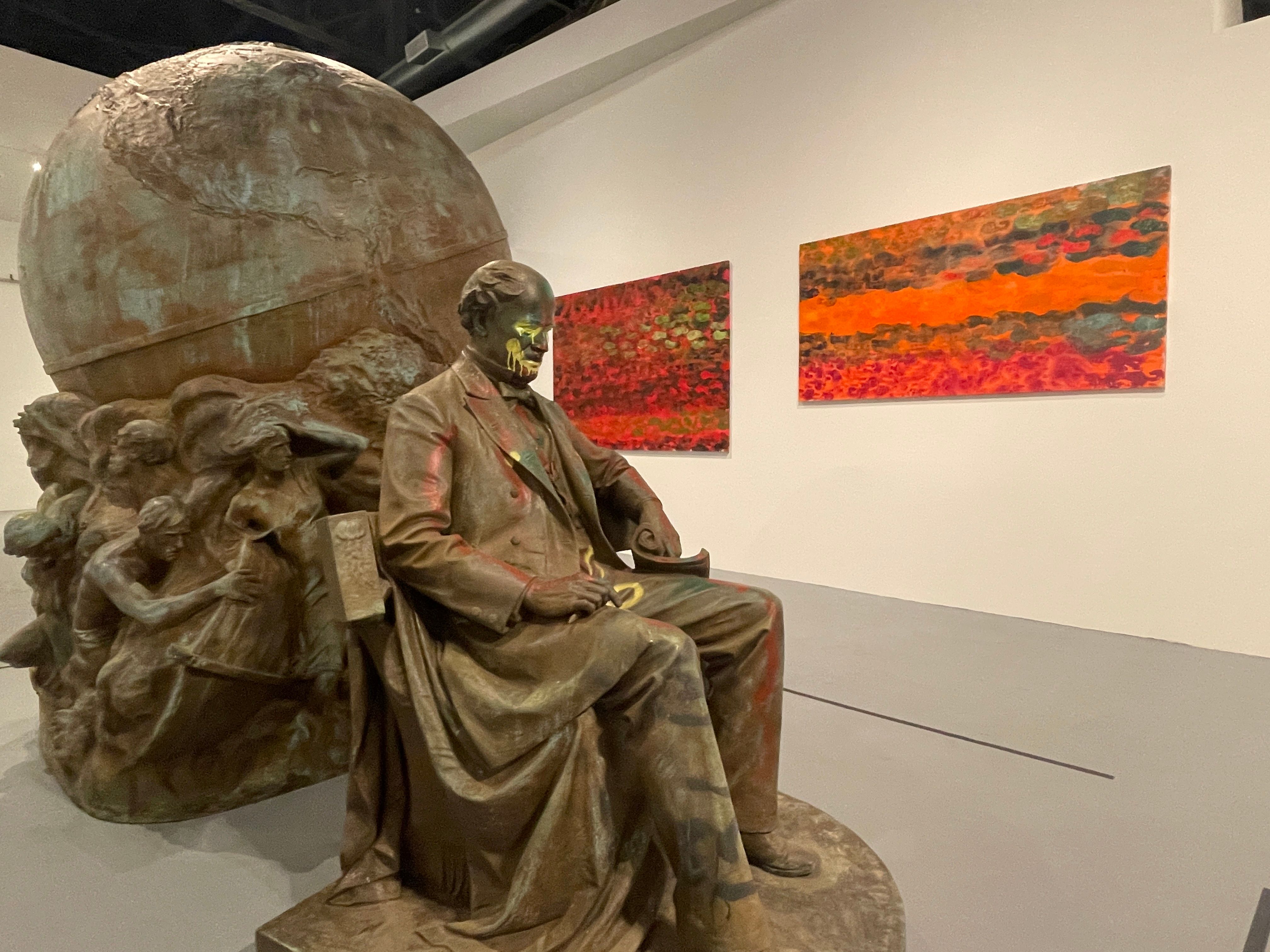
Installation view from MOCA’s Monuments show, of some dead white asshole’s statute covered in graffiti, surrounded by work by Walter Price. Photo by Colin Dickey.
Two
Back in November, I shared this piece by David Cunningham in Places Journal about the scars left behind when monuments are removed, and it’s something I still think about a lot. As he writes in that piece, “as embodiments of unacknowledged and unreconciled histories, Confederate monuments are not easily expunged, even when their erstwhile places now appear as voids.” These spaces were contested when these monuments were first erected, and they continue to be contested now that some of them (by no means all) have been removed. The remnants left behind—sometimes in the forms of plinths, slabs of concrete, or seams in the asphalt—testify to that ongoing negotiation of space.

The plinth on which a statue of a Confederate officer once stood, Louisville, KY, bearing the traces of graffiti when it was defaced before being removed. Photo by David Cunningham.
Three
But the Monuments show also got me thinking about this term “Damnatio Memoriae” (damnation or condemnation of memory).
There are a number of different examples, and you can immerse yourself in the Wikipedia page if you’d like, but the idea that I’m most fixated on is the practice where rather than merely erasing someone’s memory entirely and obliterating all trace, you make it clear what you’re doing. You leave the scar behind, you make it clear the ignominy of the target—they were once revered, but now, pointedly, they are disgraced.

Per Wikipedia: “The Doge of Venice Marino Faliero’s portrait (right) was removed and painted over with a black shroud as damnatio memoriae for his attempted coup. The shroud bears the Latin phrase, ‘This is the space for Marino Faliero, beheaded for crimes.’”
Four
I first heard about this concept through my friend Joe Howley, a classicist at Columbia. Joe used it on his Instagram stories to describe something he came across in 2020: in the early months of the pandemic, someone had spray painted a series of messages on the sidewalk around Columbia: “Thank You Nurses,” “Thank You Firefighters,” “Thank You NYPD,” and so on. Over the summer, however, in the midst of the George Floyd protests, one of these messages had been altered.

Morningside Heights, Manhattan, 2020. Photo by Joe Howley.
Five
There’s some discussion about whether or not this practice actually existed, or if this is just a case of the ravages of time taking their toll on statues and other ephemera. Whether or not that’s the case, I still think it’s a valuable concept to keep in mind.
It’s different than pure erasure, which, I think in a current age of misinformation and disinformation, is dangerous—we’re more liable to forget things when they’re erased entirely. Damnatio Memoriae offers a means of re-monumentalizing the space around us, creating alternate kinds of memorializations, ones that call attention to the scars and damage done by those who were once revered and who are now in disgrace.
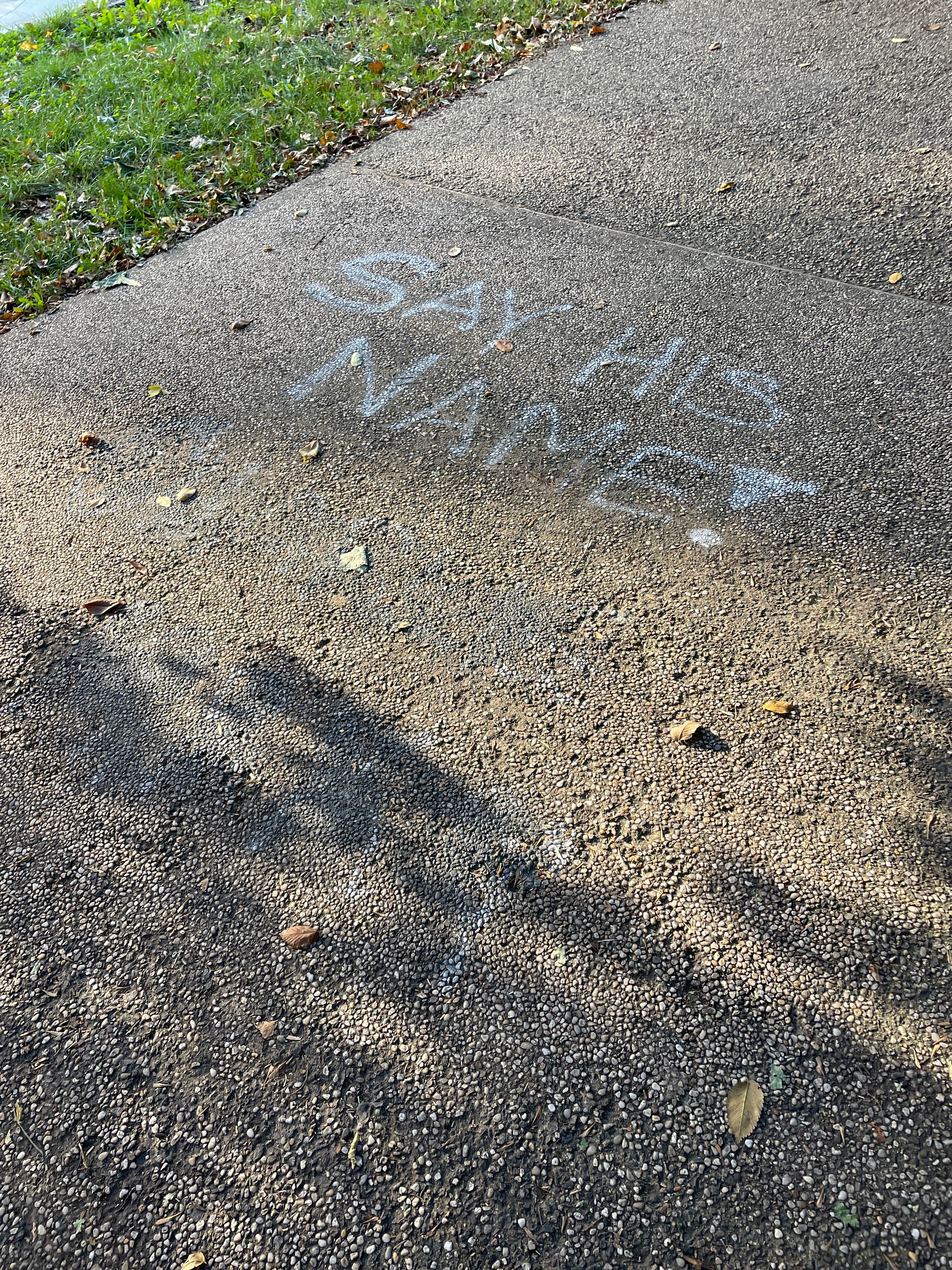
Outside Prospect Park, Brooklyn, October, 2025. Photo by Colin Dickey.